The Global Energy & Electrification Summit (GETES)
The Global Energy & Electrification Summit (GETES) - Event Production
E3G, an independent climate change think tank working on the politics of the transition, and one of four co-organisers of GETES
Mansion House, City of London
Role: Event Producer (4 months)
Produce E3G's side of a summit co-organised with the Global Renewables Alliance, the We Mean Business Coalition and HM Government, delivering a closed-door ministerial and CEO dialogue, an accredited press briefing and a 584-strong plenary in a single afternoon, with the UN Secretary General, President Whipps of Palau, Ed Miliband then Secretary of State for Energy Security and Net Zero, and the COP30 and COP31 presidencies.
Context:
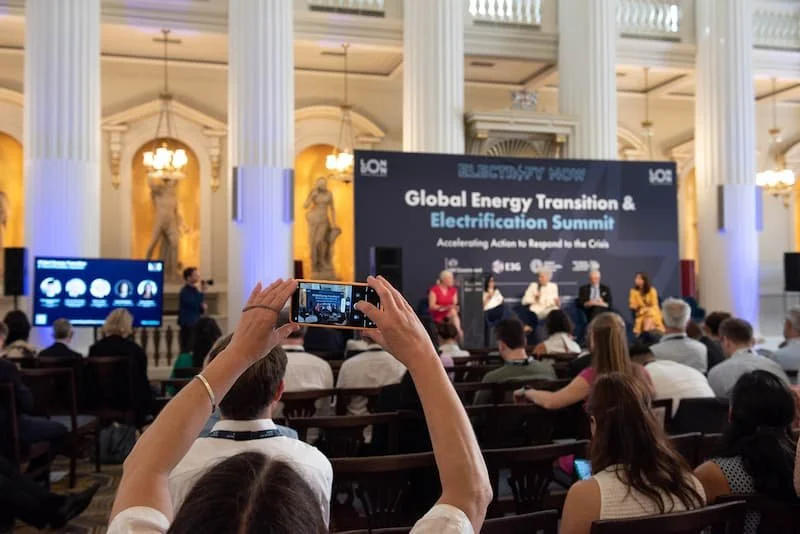
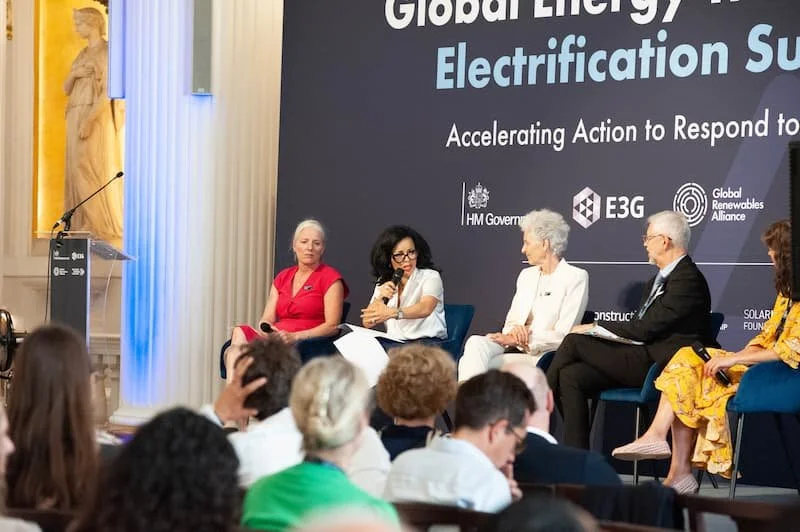
GETES was built to accelerate electrification and the transition away from fossil fuels, and to launch the #ElectrifyNow campaign, at a moment when climate cooperation was under real strain. It ran on the afternoon of 23 June 2026 at Mansion House as part of London Climate Action Week, and was co-organised by E3G, the Global Renewables Alliance, the We Mean Business Coalition and HM Government.
No single organisation owned it. The programme, guest list, protocol, press and branding were all decided across the four, and each partner brought their own stakeholders and institutional relationships to the table. The afternoon ran in three formats: a closed-door High-Level Ministerial and CEO Dialogue, an accredited press briefing, and a public plenary followed by an evening reception.
The Challenge:
A four-way co-organiser model gives you an extraordinary guest list but no single chain of command. Every decision on programme, protocol and press had to be made across four organisations rather than inside one team, at the first London Climate Action Week a UN Secretary General has attended, with GETES chosen as one of his keynotes.
E3G needed more than a producer. They needed someone who could sit in the co-organiser room as E3G, hold their position on the day-to-day calls, commit on their behalf and bring decisions back, all while their own people were carrying four other LCAW flagship events in the same week.
And the protocol bar was the highest of anything DisCom has produced. A serving head of state, the UN Secretary General and a Secretary of State in one building, on one afternoon, with three formats, a press briefing and a public plenary of nearly 600 people running in parallel, sandwiched between the morning’s State of Climate Politics, and an evening reception sponsored by LinkedIn.
The Work:
I brought in a DisCom team of two to work as an E3G resource, inside the E3G team.
Representing E3G in the co-organiser group across four organisations, sitting on the weekly calls as E3G's voice on production and protocol, and being the one of the key POCs for the project.
Working directly with the UN Secretary General's team, and with the DESNZ team including the Secretary of State's security detail, on access, timings, arrivals and room requirements for the principals
Building the delegation liaison officer model with the co-organisers, connecting each country and organisation with their named DLO before the day rather than on arrival. Protocol and high-level participant management came back as the strongest-rated area of the whole summit
Supporting the programme and run of show across three formats in one afternoon, holding the joins between the closed-door dialogue, the press briefing and the plenary, and the room specification across the Egyptian Hall, the Old Ballroom, the North Drawing Room press briefing and a dedicated speaker room
Managing the £100,000 budget and making the case for spend where it mattered. In a co-organised summit with shared costs, the first things cut are the ones guests actually feel. I pushed for tech-based registration over the cheaper option, and LCAW branding outside the building.
Crowd control across the building. Three formats in one afternoon, a public plenary of nearly 600 turning over into an evening reception, and closed-door rooms running throughout. We managed arrival and registration flow, badge and access control across the VIP room, the press briefing and the plenary, and the movement between floors, so the closed rooms stayed closed and the public rooms kept moving
Setting the operating rhythm the partners then ran on inside E3G: weekly project management meetings with structured update emails, a clearly built shared drive and function-specific WhatsApp groups, so decisions moved in hours rather than days.
A structured feedback survey across all four co-organisers covering project management, stakeholder management, programme, invitations and RSVPs, protocol, comms and press, and logistics, written up and taken into a co-organiser debrief on 16 July
GETES in numbers
927 registrations, 584 in the plenary, 105 in the High-Level Dialogue, 20 Tier 1 press.
26 plenary speakers across the afternoon.
20 high-level delegations including the UN Secretary General, a serving head of state, a UK Secretary of State and more than 20 ministers and senior country representatives.
50+ CEOs: 25 from business and 15 C-level leaders from industry bodies and international financial institutions.
The room split NGO 34%, business and industry 30%, government 21%.
Co-organisers scored the summit 9.78 out of 10 against its objectives, 8.56 on delivery and 8.56 on collaboration and project management.